
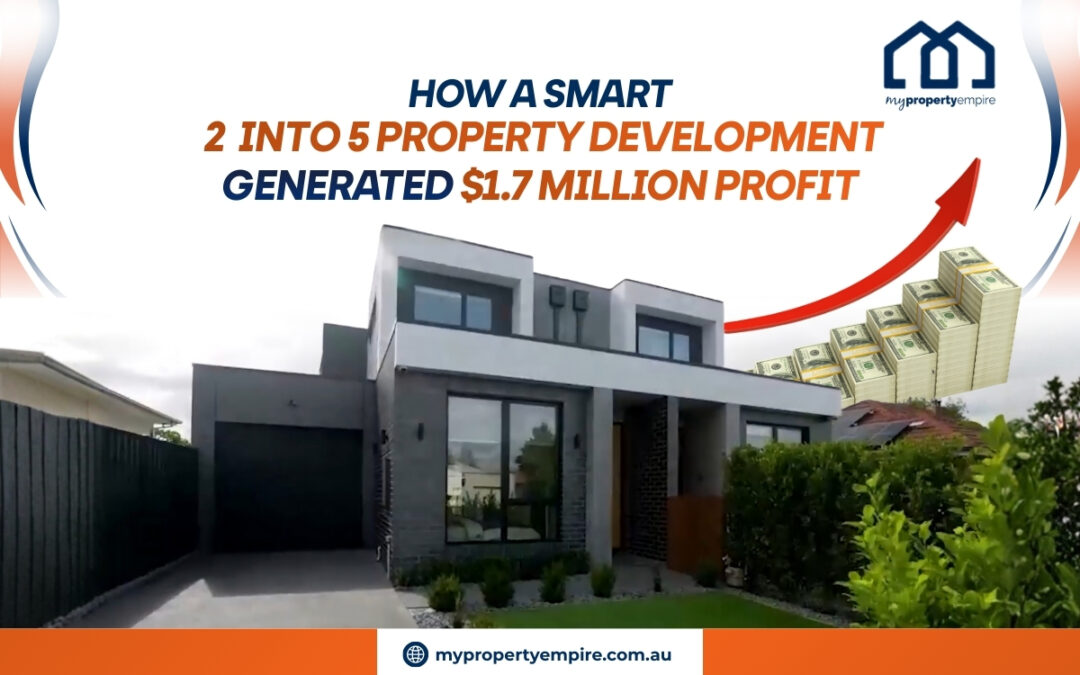
Property development isn’t about squeezing the maximum number of dwellings onto a block—it’s about executing the right strategy for the right market.
In this real-world example, I break down a 2-into-5 property development strategy that’s projected to generate over $1.7 million in profit across four years, while keeping debt manageable and cash flow strong throughout the build.
This approach is especially relevant in today’s market, where rising interest rates and tighter lending conditions mean risk management matters more than ever.
Watch the Full 2 Into 5 Development Breakdown
If you want to see the numbers, strategy, and site explained step by step, watch the full video below.
What Is a 2-into-5 Property Development?
A 2 into 5 property development involves purchasing two adjoining properties and redeveloping the combined site into five well-designed dwellings that suit local market demand.
Unlike high-density developments, this strategy focuses on:
- Better cash flow
- Lower finance costs
- Reduced risk
- Higher-quality end products
When done correctly, it can significantly outperform overbuilt projects.
The Property Development Opportunity
This project began with the purchase of two neighboring properties on a corner block—a setup many developers see as an opportunity to build as many dwellings as possible.
But more dwellings don’t automatically mean more profit.
Instead of defaulting to demolition and maximum density, this site was carefully assessed for:
- Market demand
- Cash flow potential
- Financing risk
- End resale values
That analysis shaped every decision that followed.
Why Most Property Developers Lose Money
Many developers fall into the same traps:
- Knocking everything down without considering holding income
- Overbuilding to chase scale
- Designing properties the market doesn’t actually want
- Relying solely on end sales to survive the build phase
This leads to higher holding costs, longer project timelines, and unnecessary stress—especially when markets slow or interest rates rise.
The Smarter 2 Into 5 Property Development Strategy
This project takes a very different—and far more sustainable—approach.
Retaining One Dwelling for Cash Flow
Instead of demolishing both houses, one existing dwelling is retained and renovated.
This provides:
- Rental income throughout the development
- Loan repayment support during construction
- Reduced pressure on cash reserves
Cash flow during development is one of the biggest advantages a small-scale developer can have.
Demolishing Only What Doesn’t Work
The second dwelling had a poor structure and layout, making renovation inefficient and costly. Demolishing only what didn’t make sense allowed the site to be optimized without overcapitalizing.
Smart development decisions are based on numbers—not emotion.
Building What the Market Actually Wants
Rather than cramming in 8 or 9 small dwellings, this project delivers five high-quality homes designed specifically for second-home buyers.
Key features include:
- 2–3 bedrooms
- 2 bathrooms
- High ceilings
- Caesarstone benchtops
- Butler’s pantries
- Strong street appeal and a clear “wow factor”
This design approach attracts stronger buyers and higher resale prices.
How This Strategy Reduces Risk and Increases Profit
By building five dwellings instead of eight or nine, the development benefits from
- Lower construction costs
- Reduced finance requirements
- Easier lending approvals
- Faster sales absorption
The retained dwelling can later be sold as part of the subdivision, further reducing debt and unlocking capital for future projects.
Why This 2-into-5 Development Works
This project demonstrates a key truth in property development:
Lower risk and better cash flow often beat higher density.
Success comes from:
- Matching design to market demand
- Maintaining income during development
- Controlling debt levels
- Treating development as a business, not a gamble
Key Takeaways from This 2 Into 5 Property Development
- Retaining one dwelling improves cash flow during construction.
- Fewer dwellings can produce higher overall profit.
- Market-driven design reduces resale risk.
- Cash flow helps offset rising interest rates
- Smart planning lowers financial and emotional stress.
Is a 2-into-5 Property Development Profitable?
Yes—when executed correctly. A 2-into-5 development can be highly profitable because it balances density, cash flow, and market demand. By avoiding overbuilding and maintaining income during the project, developers can reduce risk while maximizing returns.
What Is the Lowest-Risk Property Development Strategy?
Lower-risk property development focuses on:
- Retaining income-producing assets
- Building what buyers want—not just more dwellings
- Keeping finance requirements conservative
- Allowing flexibility if market conditions change
This project is a strong example of that approach in action.
Learn More About Property Development in Australia
If you’re serious about building wealth through property—without unnecessary risk— visit My Property Empire
You’ll find practical education, real-world strategies, and guidance designed specifically for Australian investors and developers.
Want to Build Your Property Empire?
Sign up for one of our free property mini-courses to get started:
1. Property Investment Course
2. Property Development Course
Sign Up Here

Recent Comments